
Course contents
On this page
Distributed ML Systems
Introduction
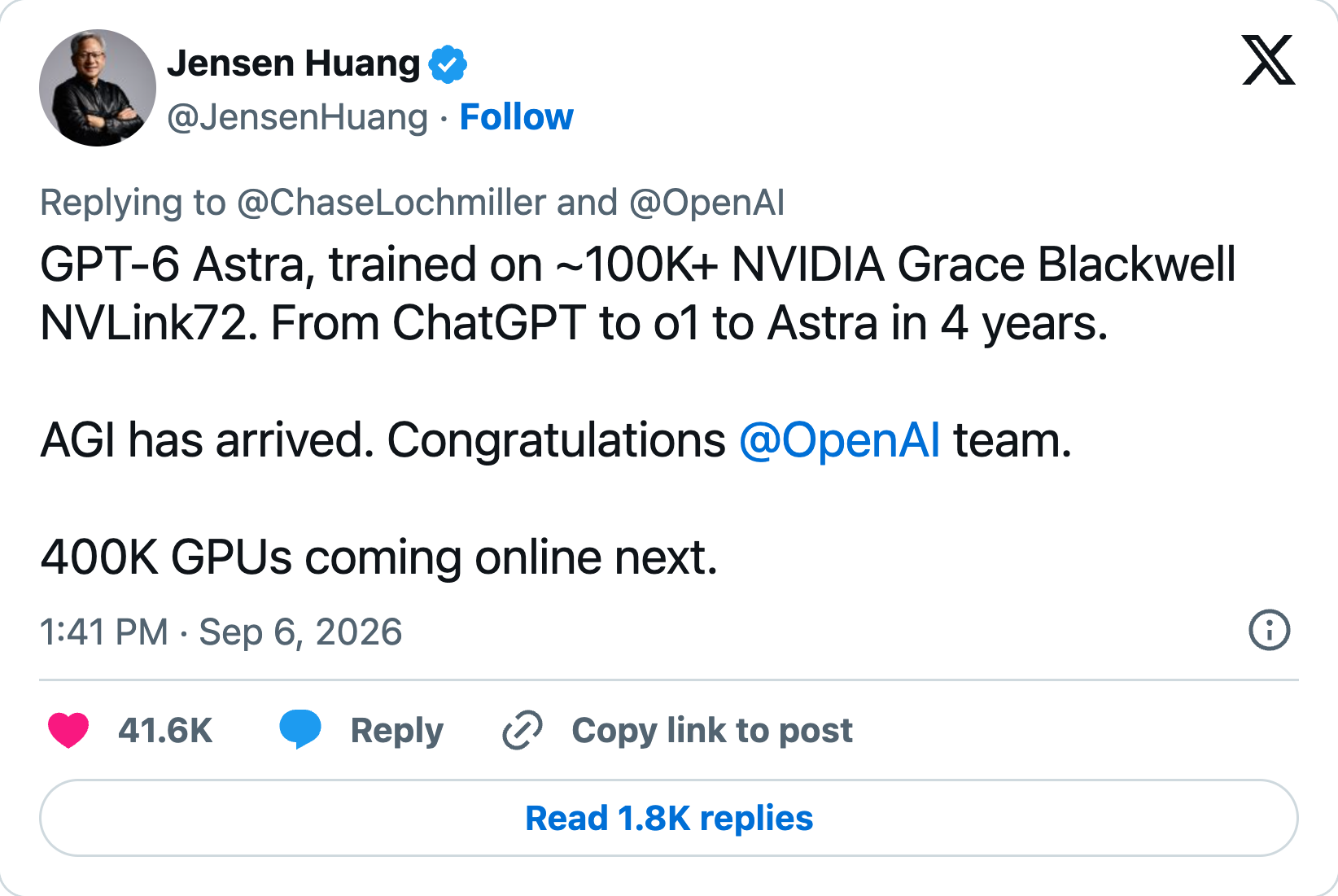
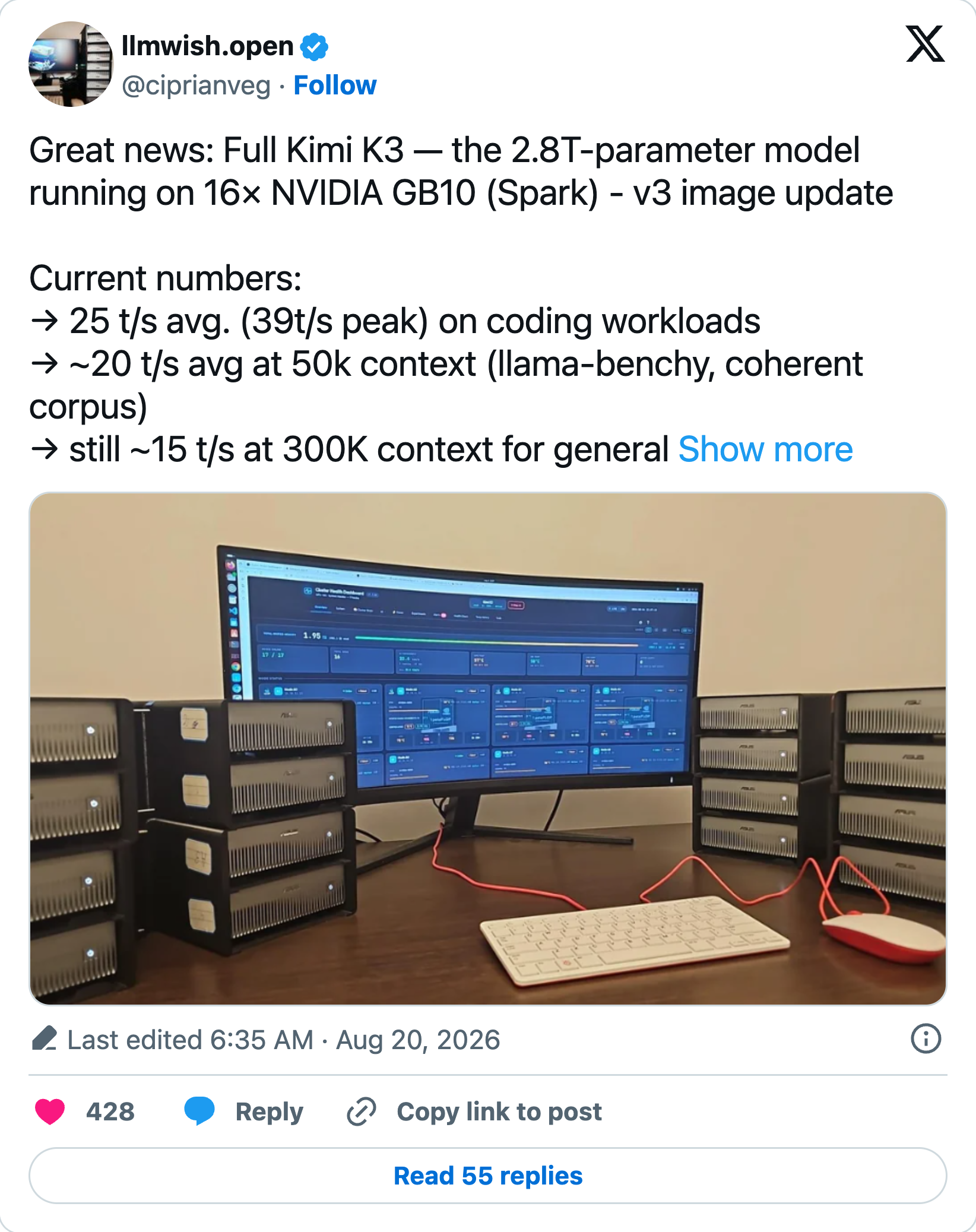
Distributed ML workloads are popular nowadays, not only for large-scale LLM training but also for smaller-scale LLM serving. In these workloads, multiple GPUs or accelerators interconnected via communication links usually hold the LLM model and related state to synchronously finish the task. Examples include training GPT-6 Astra [1] on ~100K NVIDIA NVL72 GB300 GPUs and serving Kimi K3 [2] on 16 NVIDIA DGX Spark systems.
Distributed ML is apparently becoming one of the most critical pieces of efficient LLM infrastructure. However, there is a huge gap between what you learnt from a decade-old classroom computer networking course and what you will need for real-world LLM infra engineering; this course aims to close that gap. This course is unique in that 1) it distills lessons from the UCCL GPU communication system developers’ several years of experience, 2) it presents practical techniques that are effectively used in industry yet exist only in experts’ minds, and 3) it comes with code and speaks in code most of the time. This course will likely be useful to you if you are applying for industry positions in frontier labs or starting LLM infra research or you just want your agent to read it for its memory context. We structure the course into five parts based on the challenges we are facing in distributed ML workloads, in a principled way. They include:
GPU communication: Distributed ML brings enormous challenges to inter-device (GPU/accelerator) communication for two main reasons:
- Communication wall: we need to feed data fast enough to the expensive compute device. You will see that inter-device communication links are becoming faster and faster every year and reaching an incredible number like the total internet bandwidth in a single NVLink domain.
- Synchronized workloads: any device-local slowdown can easily cause a global task-level slowdown, causing the so-called bubbles where the expensive device stays idle waiting for data input.
GPU communication is also heterogeneous, making it one of the most challenging topics in LLM infra:
- Scale-up domain: e.g., NVLink from NVIDIA, Infinity Fabric from AMD, ICI (Inter-Chip Interconnect) from Google TPU, NeuronLink and NeuronSwitch from Amazon Trainium. These domains usually have TB/s of per-chip communication bandwidth and a smaller radius covering dozens of GPUs/accelerators. ICI is an exception in that it can support up to 9,216 chips on TPU v7.
- Scale-out domain: mostly RDMA. Almost every chip vendor makes RDMA NICs (network interface cards), including NVIDIA, Broadcom, and AMD, and even cloud providers like AWS offer them (e.g., EFA). One GPU could have 400–1600 Gb/s or 50–200 GB/s, depending on the generation.
Collective communication: Once we have many, many GPUs, the distributed ML system engineers need a way to program this GPU communication, and that is exactly why collective communication comes into play. Typical collectives include allreduce, allgather, and reducescatter, which are widely used in LLM training and serving workloads. Within these collectives, industry cares very much about two things:
- Performance: of course, whether it can reach the hardware limit, also called the line rate.
- Fault tolerance: fortunately, NCCL is adding some support for this, though progress is slow and the support is still immature.
ML parallelism: Once we have the collective programmable abstraction, ML parallelism becomes a natural next step to distribute model weights and states across many GPUs and achieve the ultimate goal. Typical parallelism includes data parallelism, tensor parallelism, expert parallelism, context or sequence parallelism, and pipeline parallelism. These forms of parallelism are usually tightly coupled with LLM compute operations and partition compute among multiple GPUs with the aid of collective communication.
Kernel fusion: This is a relatively new topic in distributed ML but is becoming more and more important to squeeze value out of these expensive GPUs. The common communication operations, including the NCCL ones, each run as a single dedicated kernel to achieve a certain goal like allreduce. They can only be overlapped with compute operations at a coarse granularity, such as dozens of milliseconds. However, with more and more dynamic token-level operations like MoE, fusing communication operations directly with the compute operations inside a single kernel becomes more appealing, as it enables fine-grained overlap at token and microsecond granularity. Of course, this is only made possible because of the rise of device-initiated communication like NVLink LD/ST and IBGDA for GPU-initiated RDMA.
Accelerator interconnect: Non-GPU accelerators like Google TPU, AWS Trainium, Meta MTIA, and Microsoft MAIA are becoming popular for two main reasons: 1) they are cheap because they avoid the so-called NVIDIA tax, and 2) NVIDIA GPUs are just in such high demand that no one can get enough capacity for training and especially serving. We want to stress that because these accelerators are designed from scratch, they have very interesting and vastly different interconnect mechanisms. However, these are usually less commonly available on the internet. This course will try to pull back the curtain on these accelerator communication mechanisms.
Acknowledgment
We thank Mibura for sponsoring the servers used for all performance measurements in this course.

References
- Jensen Huang (@JensenHuang). Post on the GPU cluster used to train GPT-6 Astra. X, 2026. https://x.com/JensenHuang/status/2096700264569090384
- @ciprianveg. Post on serving Kimi K3 on 16 DGX Spark systems. X, 2026. https://x.com/ciprianveg/status/2090432579451097096
Table of contents
Part 1
GPU Communication
NVLink, RDMA, IBGDA, and large-scale RDMA network topology, congestion control, and observability.
Part 2
Collective Communication
Collective primitives and algorithms, NCCL, DeepEP, and fault tolerance.
Part 4
Kernel Fusion
Two-batch overlapping, tile-level overlapping, signaling, buffer management, and SM scheduling.